
A sentinel of water quality
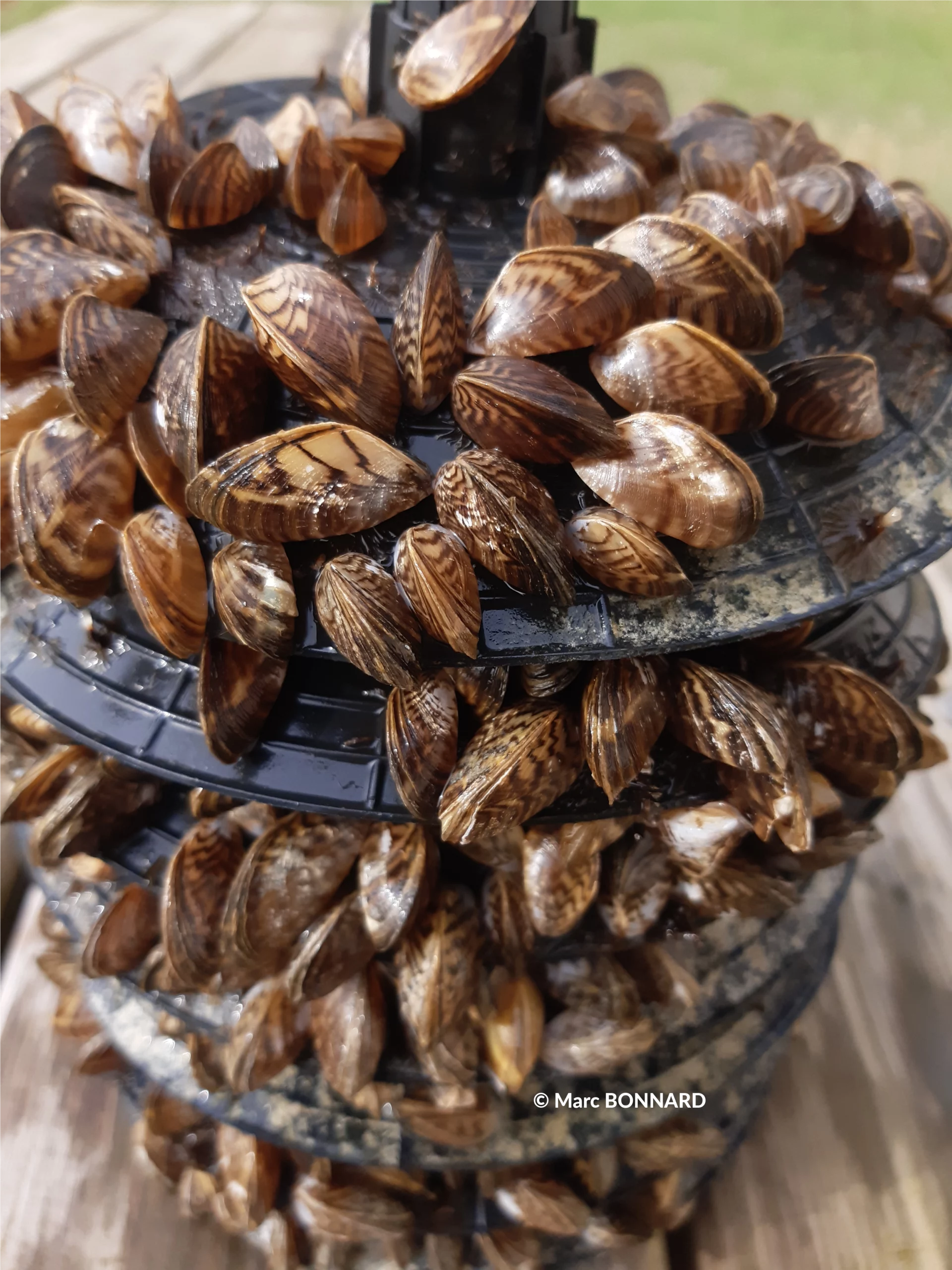
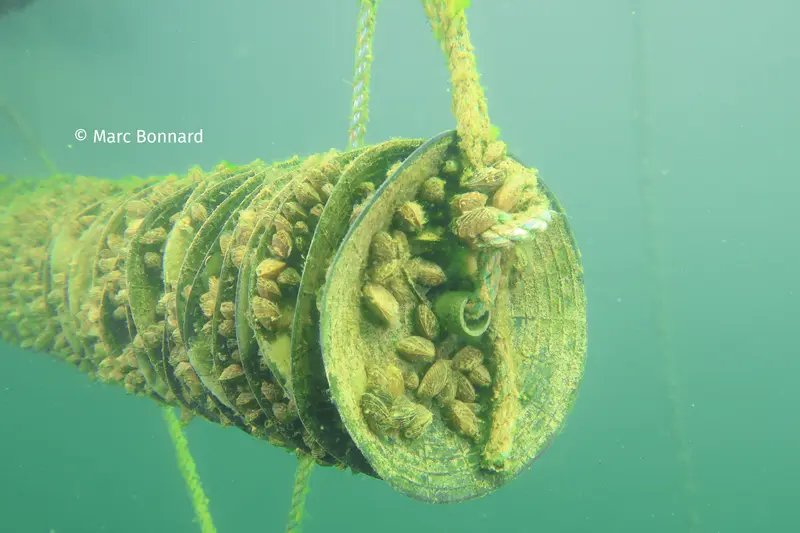
Thanks to its ability to filter water and bioaccumulate contaminants, the zebra mussel is a sentinel species for the quality of continental aquatic environments. Its high tolerance to physico-chemical variations enables it to thrive in numerous environments. It provides effective information on both chemical and microbiological contamination, whether in natural water bodies, effluents, or process water.
A calibrated bioassay for reliable results
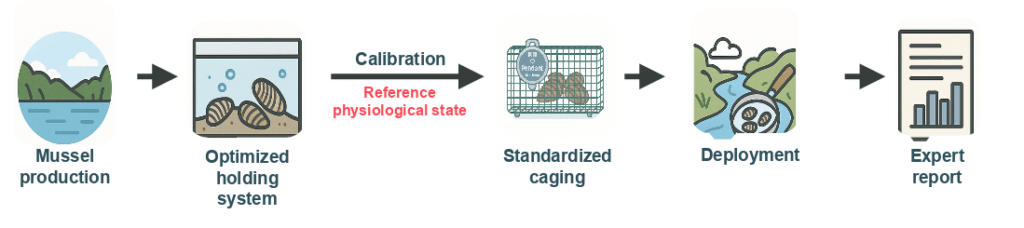
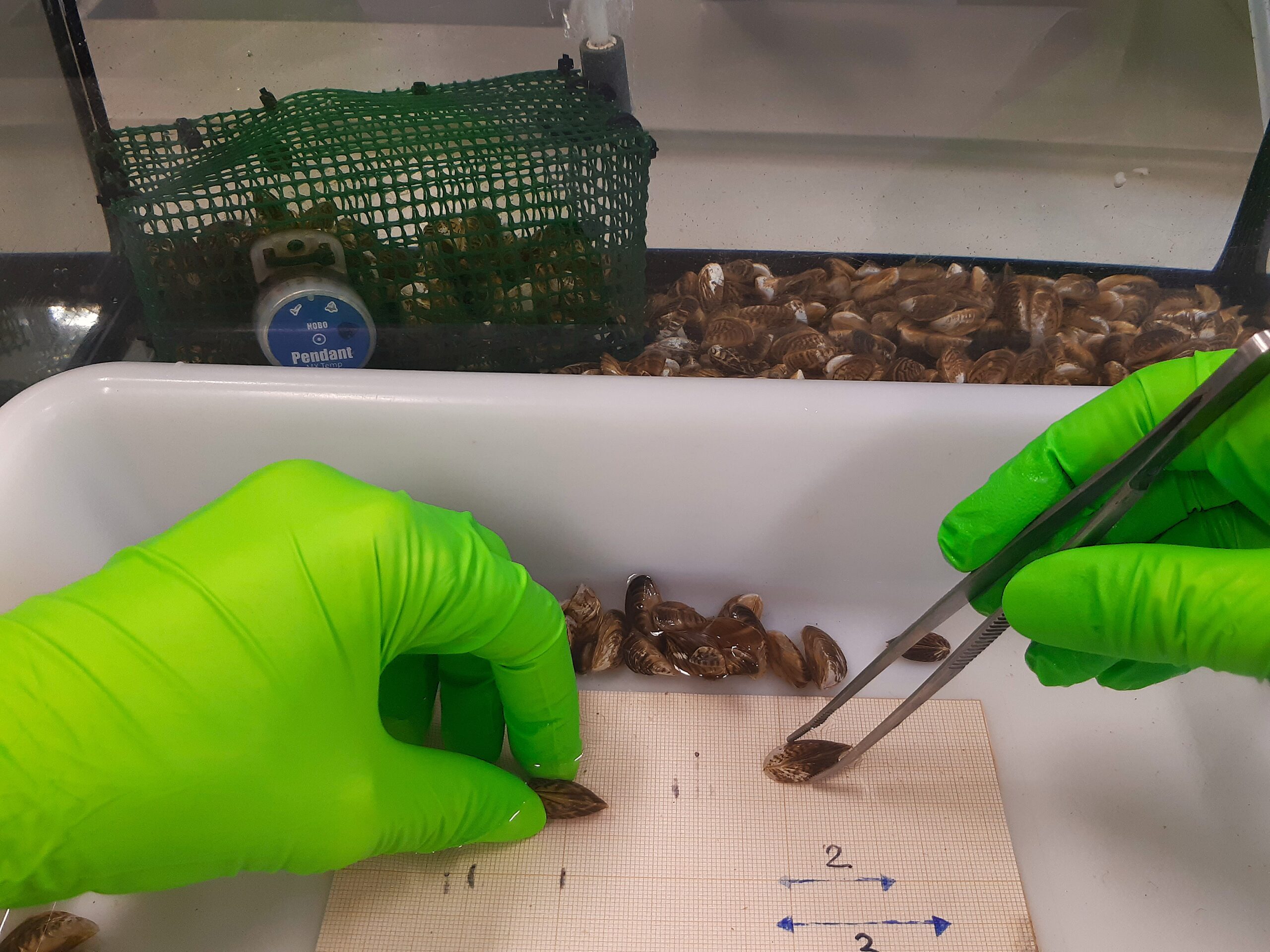
The zebra mussels used in our bioassay are sourced from a well-characterized natural population (population dynamics, recurring presence of contaminants). They undergo stabilization in controlled conditions to normalize their physiological state and eliminate residual traces of chemical compounds. The final calibration of individuals (age, size) used in the bioassay minimizes interpretation bias, ensuring results that are both reliable and comparable for our clients.
Monitoring a wide variety of aquatic environments
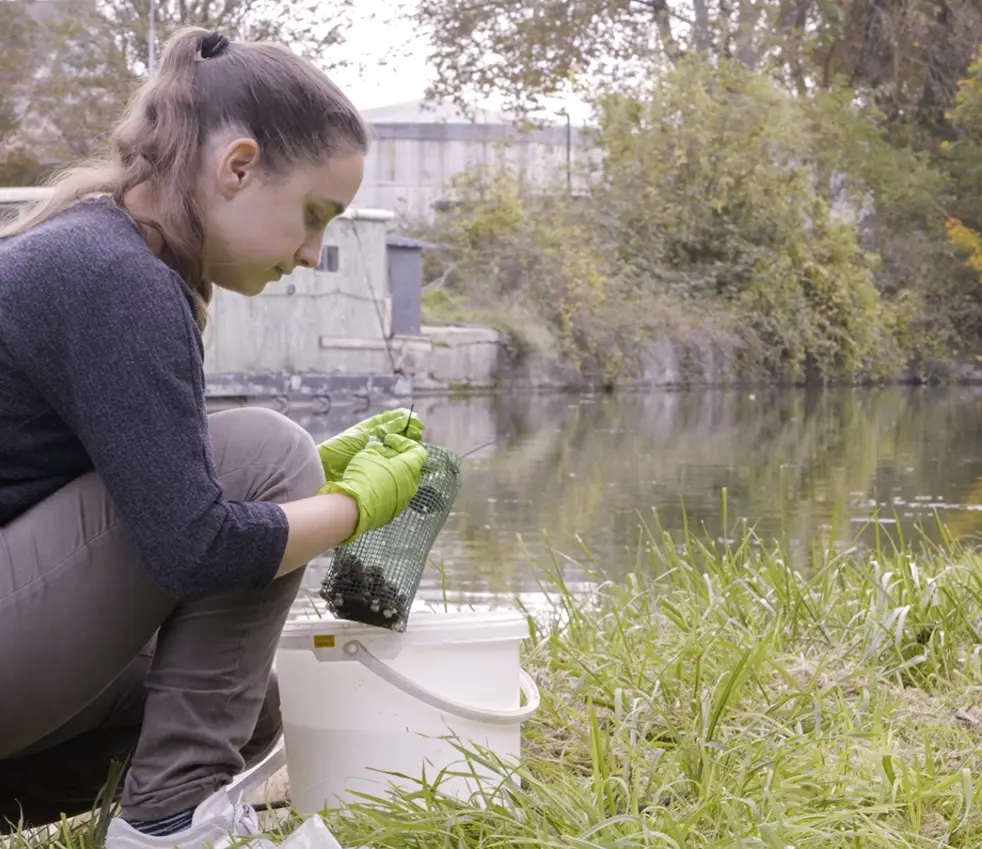
The dreissena bioassay can be employed in many types of aquatic systems, and the exposure duration can be adjusted depending on the specific issue—from one week to several months.
A tool for detecting multiple targets
The dreissena bioassay has been developed to detect a wide range of contaminants, both chemical (metals, PAHs, PCBs, PFAS, pesticides, etc.) and microbiological (infectious FRNAPH viral indicators, bacteria, viral genomes).